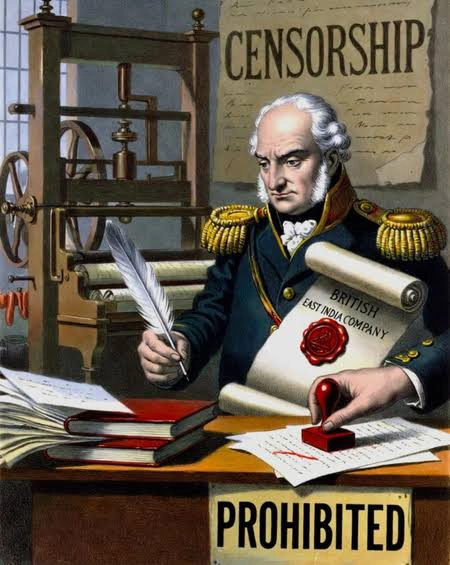
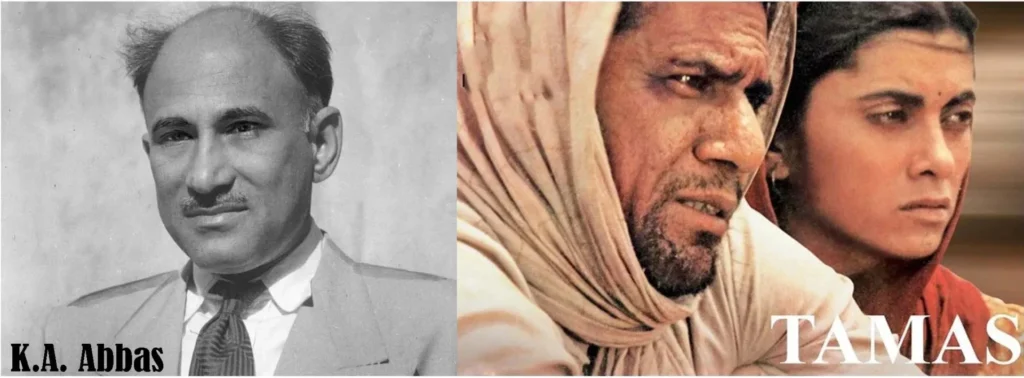
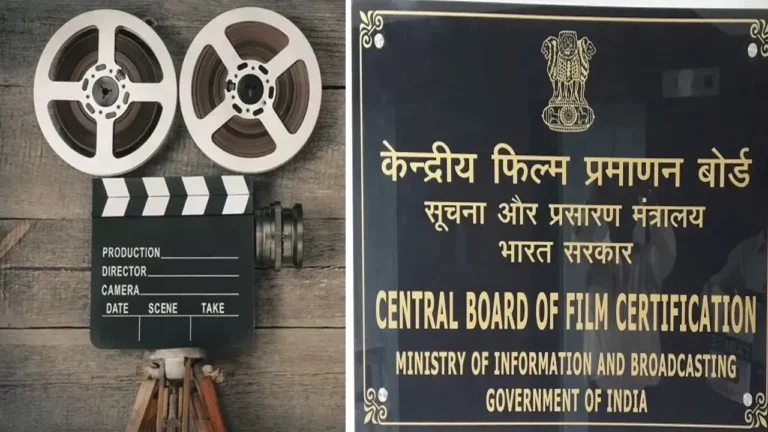
Constitutional bodies like the Central Board of Film Certification (CBFC) apart, there is also the censorship of the mob. Goondas or extra-constitutional vigilantes who do not like what a film is saying, riot and disturb or terrorize exhibitors into abandoning the screening. Mob censorship has occasionally afflicted fiction film releases. It has happened multiple times to my documentaries like Ram Ke Naam, which was attacked in different locations like Law College in Pune, Ambedkar University in Delhi, Hyderabad Central University, Presidency College, Kolkata to name just a few. In some of these cases the film screening could still go ahead because there was a censor certificate and legally, they could not stop it. In Delhi for example, students called in the police and finally the goonda elements were thrown out. Shockingly the government is now trying to bring in a new amendment that will allow them to remove censor certificates granted by previous governments. The amendment if promulgated will allow the present regime to simply withdraw censor certificates granted earlier. Film screenings would then become illegal and they could bust into a screening, confiscate equipment and even put you in jail for showing a film without a newer certificate.
I don’t think many democratic countries resort to such extreme interference in film making, especially of documentary films. Of course fiction is also subject to censorship but here the cuts they ask for have mainly to do with sex and violence. In fact violence bothers them less than sex. Many Bollywood films celebrate violence.
With documentary films the main censorship is political. Criticism of the government or of the government’s ideology is not tolerated. Things are worse if you have a secular ideology today. In other words, if your ideology is actually in consonance with our Constitution, then right now you are in deep trouble. In my view the present government is constitutional only in the sense that it was elected but it clearly does not follow the spirit of the Constitution. So when you do follow the spirit of the Constitution, you fall afoul of what the government thinks you are allowed to do. Steadily the government has increased both its desire for, and its ability to, control. The index of democracy has fallen dramatically and we are at a very low rank in the world in terms of freedom of expression.
Every institution of the government is now tuned to crush dissent.
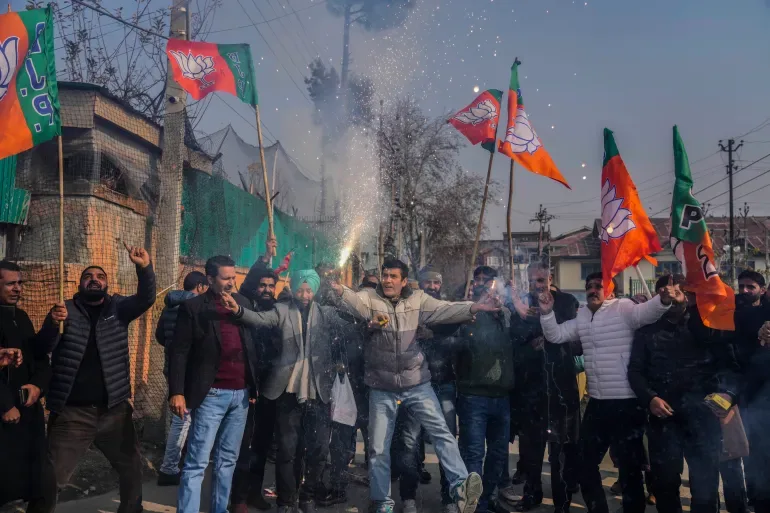
We denounce groups like ISIS and Taliban but I don’t think extreme right-wing Hindutva supremacists are very different. Yet the last 9 years of BJP rule has given unfettered freedom and institutional support to them. What is different from the Emergency of 1975 is that today’s Emergency has not been officially declared. Democracy exists only in theory and only for certain sections. The targets earmarked for repression are focussed so the bulk of the middle and elite classes do not realize there is an Emergency-like situation around them because today’s targets are not the elite. Targeted are the weakest sections among Muslims, Christians, Dalits and all those who organize the working classes. We denounce groups like ISIS and Taliban but I don’t think extreme right-wing Hindutva supremacists are very different. Yet the last 9 years of BJP rule has given unfettered freedom and institutional support to them. What is different from the Emergency of 1975 is that today’s Emergency has not been officially declared. Democracy exists only in theory and only for certain sections. The targets earmarked for repression are focussed so the bulk of the middle and elite classes do not realize there is an Emergency-like situation around them because today’s targets are not the elite. Targeted are the weakest sections among Muslims, Christians, Dalits and all those who organize the working classes.
Institutions are being systematically compromised and dissent is not tolerated. In the days I was growing up and went to college we could protest against situations we felt were wrong. Now even the physical space for protest has narrowed. Now there are designated sites where people can go to protest – like a Jantar Mantar in Delhi or a tiny section of the “Azad” Maidan in Mumbai. Earlier we could protest almost anywhere and it was taken notice of by the media. Today the mainstream media, bought by crony capital, largely ignores incidents of protest. If at all they do cover it, the extent is controlled by the government, and a majoritarian plant, thinly disguised as a “political analyst” gets to add his or her spin. Up to a year ago despite such controls someone like a Ravish Kumar still managed to do decent reporting and analysis and the government could not get NDTV to fire him. So they went one better and got their biggest crony capitalist, Gautam Adani, to buy out the channel. Today NDTV has become a joke, much more tragic than funny.
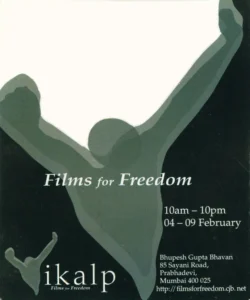
Battles against censorship have been fought outside court as well. The Mumbai International Film Festival (MIFF) never asked for censor certificates when it first began in 1991.
It is an international documentary film festival and films from all over the world were never asked for censor certificates. In 2002 an anti-Muslim pogrom had taken place in Gujarat under the watch of Chief Minister Modi. The BJP was in power at the Centre. Fearing critical films, a rule was introduced that required Indian films at the festival to have censor certificates. Outraged Indian filmmakers ran a parallel festival called Vikalp. We were soon joined by international filmmakers and we showed films regardless of certificates and our festival attracted bigger crowds than the official one. Of course, this was at a relatively early stage of BJP rule and we could get away with it. Since then groups like Vikalp have mushroomed across the country.
Social media and OTT platforms are a bit of relief in present times. But this is not an ideal situation because individuals watching a small computer monitor or phone is no substitute for a big screen with a live audience. We used to screen our films and have discussions with large audiences but that has become rare. Social media is also controlled. In the early days of Facebook, each of my posts would get 60,000 or more views and these were growing all the time. Then Facebook monetized, changed algorithms, and now if lucky, I get few hundred views. Any content which is critical of the government immediately gets restricted. Even on YouTube, my films for which we fought hard to get a ‘U’ certificates have been restricted with dire false alarms about their content. Several other methods like fake copyright strikes are employed to restrict the reach of any content critical of the powers that be.
We all know what happened to Twitter. Twitter tried to stand up to the government, the government cracked down on them. The so-called “international” social media is also controlled either directly through the government or its majoritarian ideologues who infest Silicon valley. On OTT platforms like Netflix, our last film Reason which won Best Feature at the International Documentary Film Festival in Amsterdam and qualified for the Oscars, could easily have been shown as an eight-part serial but Netflix told me openly that if they showed the film, they would be thrown out of India. Oscar-nominated Indian documentaries like Writing with Fire and All that Breathes were not shown out of the same fear. Even Meera Nair’s A Suitable Boy ran into trouble because bigots started making a noise about the Hindu-Muslim romance in it. Luckily the film was not taken off but the noise reached everybody and Netflix in particular. Such censorship is specially harmful to people who make high budget films and have a lot to lose if their avenues are suddenly cut off. Most content producers end up doing self-censorship and playing it safe. In our case it doesn’t matter so much as big distribution channels have been closed to us for a long time.
We continue doing what we believe in. These circumstances will not last forever. Everything changes and we must keep moving forward. If we censor ourselves we send out a message of fear. So we will keep speaking. And keep finding ways to get the word out.