Anand Patwardhan: The taming of the Mumbai Press Club
The expulsion of the institution’s former president and two other veteran journalists is a sign of how spaces for democratic discussion are shrinking in India.
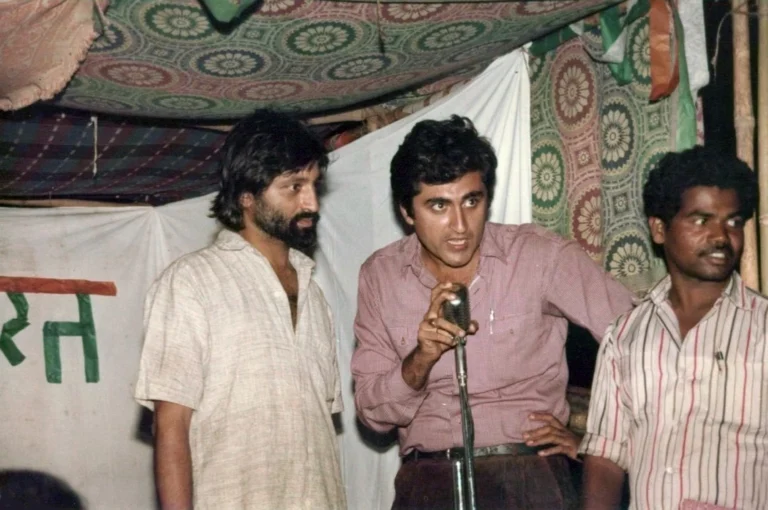
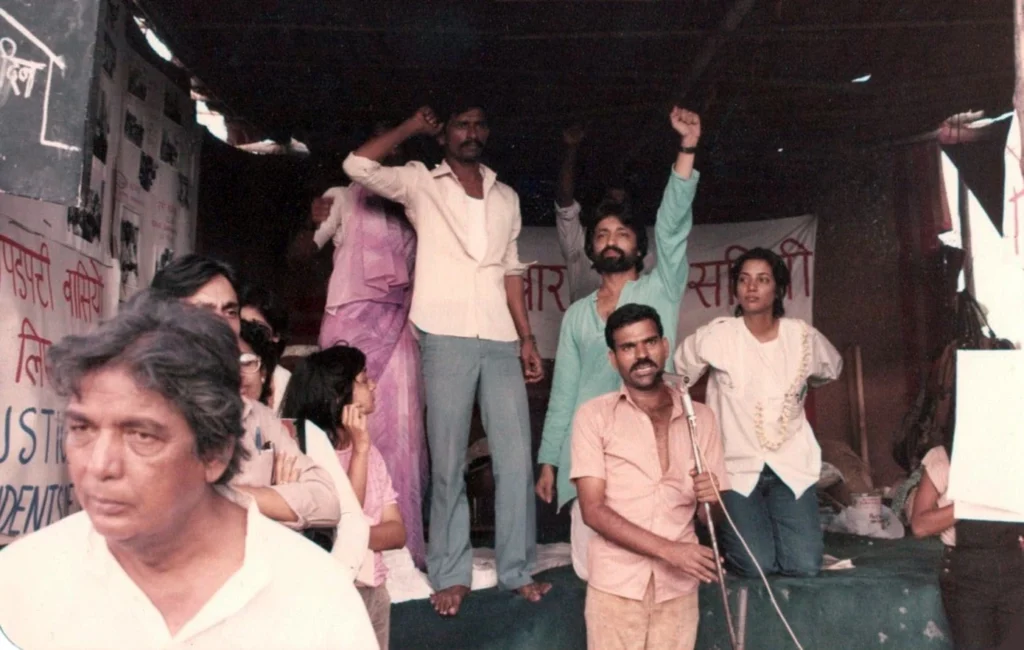
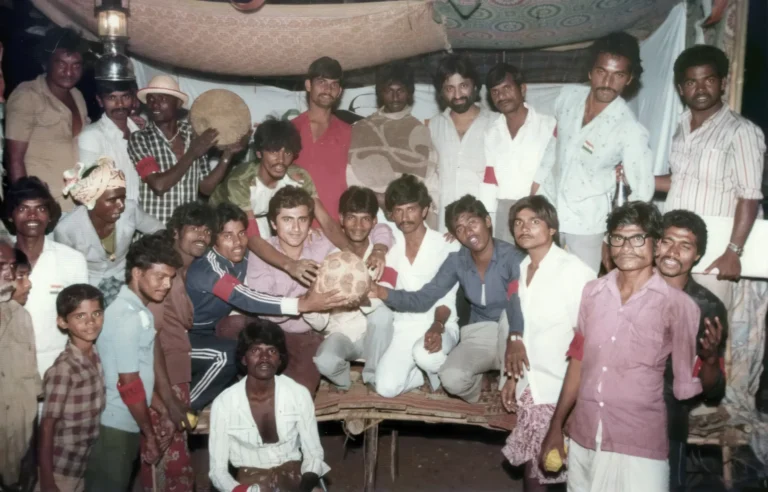
Filmmaker Anand Patwardhan and journalist Gurbir Singh in the early 1980s. | Anand Patwardhan
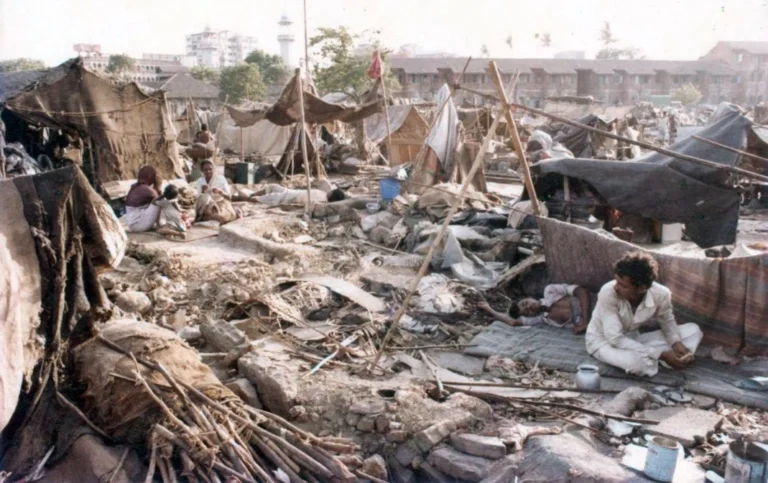
I first met Gurbir Singh in the early 1980’s. It was around the beginning of the “liberalization” era when egalitarian ideals were being replaced by the ideology of the “free” market. As the city of Bombay attempted to beautify itself to attract foreign investment, a huge demolition campaign began against the makeshift shanties of the homeless.
Not everyone believed that the poor were mere “eyesores” who made no economic contribution. The Peoples’ Union for Civil Liberties (PUCL) and the Lawyer’s Collective intervened on their behalf, arguing in the Supreme Court (SC) that the Right to Shelter was a fundamental right that flowed directly from the Right to Life guaranteed by the Indian Constitution.
Courtesy: Anand Patwardhan
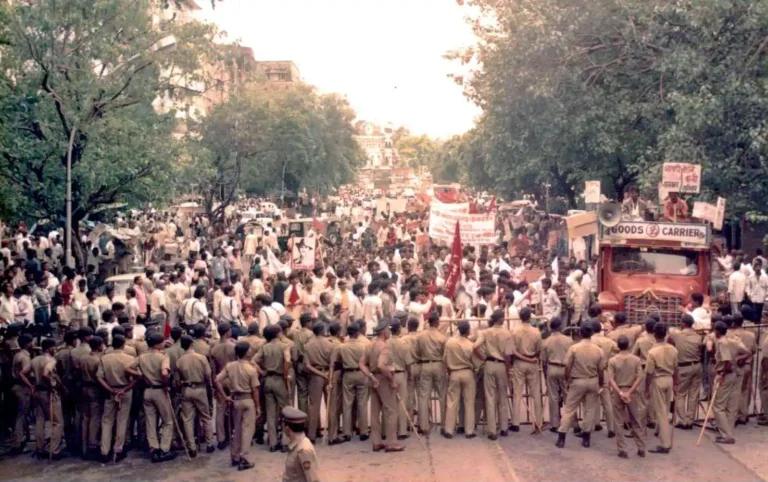
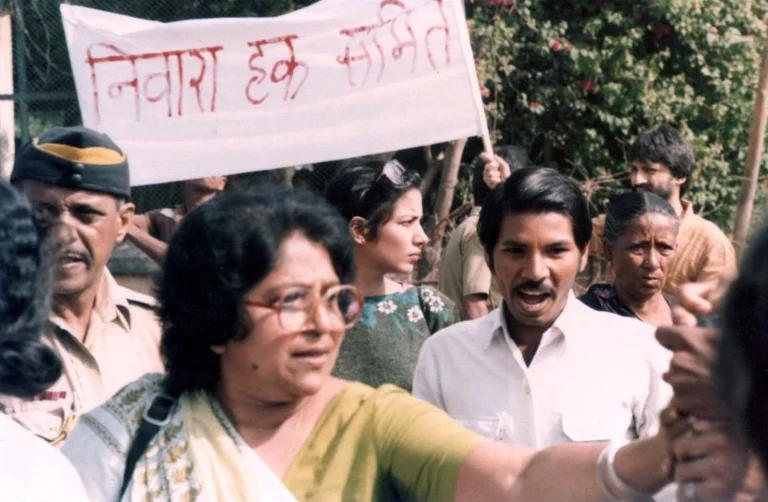
While the case was being argued, the SC had granted a stay on all demolitions but of course demolitions continued. I helped document these illegal acts, first with a still camera on behalf of PUCL and later with my second-hand 16 mm film camera. This brought me in contact with unorganized slumdwellers but also with activists who had taken up their cause. Gurbir Singh, a journalist from the Times of India group, was one of them. In the end many of us formed Nivara Hakk Suraksha Samiti to fight for the rights of the homeless. It was a protest movement involving thousands of homeless in various parts of the city.
Courtesy: Anand Patwardhan
Our film “Bombay Our City” was completed in 1984 and won a National Award but demolitions continued. The Right to Shelter case in the Supreme Court was lost and demolitions became legal again. Slums we had filmed were razed and Nivara Hakk had its hands full. Slumdwellers whose homes were demolished had nowhere to go.
Gurbir Singh was at the heart of Nivara Haq. After yet another demolition at Cuffe Parade, some of us decided to sit on a hunger strike until the government granted an alternate plot of land in the city where the homeless could be resettled. The hunger strike of four slumdwellers and myself would have gone unnoticed but for the fact that film star Shabana Azmi had recently watched “Bombay Our City” and joined us on the footpath where we sat on strike.
Courtesy: Anand Patwardhan
For the next five days the press was full of stories of Shabana’s failing health and many celebrities, including Shabana’s father, the great Kaifi Azmi, visited to give us moral support. Finally the government caved in and granted an alternate site in Goregaon. People moved there and the erstwhile Sanjay Gandhi Nagar of Cuffe Parade relocated to Goregaon where it was rechristened as Sangharsh Nagar (Struggle town). Gurbir Singh, architect PK Das and Shabana Azmi were the main organizers.
Courtesy: Anand Patwardhan
In 1992-93 after the horrific communal violence that broke out after the demolition of the Babri Mosque in Ayodhya, Sangharsh Nagar became an oasis where the riot affected could take shelter without fear. Again it was Gurbir and his team of volunteers who did dedicated relief work even as the rest of Bombay was literally being set on fire by communal politicians.
Over the years my association with Nivara Haq gradually reduced but not so my association with Gurbir. He went on to become an office bearer of the Mumbai Press Club, holding various posts including President and Secretary over the last 25 years. Under his leadership the Press Club became the first in the country to do a housing scheme where 250 journalist members got housed in Pratiksha Nagar at discounted rates. In 2007 the Club as it exists today was rebuilt after Gurbir and his associates raised corporate sponsorships.
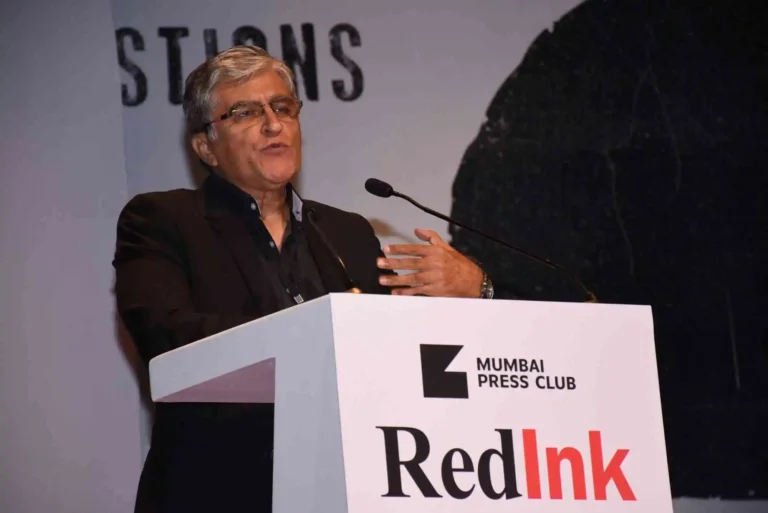
In 2011 under his leadership, the Club launched the RedInk Awards which became a national event for the next 15 years, honouring brave, cutting edge journalists across the country, from big cities to small towns. In an India where such journalism is increasingly frowned upon and faces censorship, the Mumbai Press Club became an oasis of freedom from fear.
Gurbir Singh at the RedInk awards in 2019. Credit: Mumbai Press Club
The club showed films, launched discussions, held book releases and became an important platform for debate and information on both general and professional issues to do with media.
Gurbir as a representative of the Mumbai journalists in the Press Council of India (PCI) took up the infamous Newsclick case in which nearly 200 journalists were detained in Delhi for contributing articles and stories to the website.
Debates at the club ran across the political spectrum. At the height of the Babri Masjid controversy, L K Advani faced up to journalists at the Club. Kanhaiya Kumar, Uddhav Thackeray and Prashant Bhushan were more recent visitors. Paranjoy Thakurta showed a film on electoral manipulation, Bedabrata Pain screened his film on the common plight of the farmers of USA and India, support groups showed and discussed a film on the jailed activist, Umar Khalid.
Perhaps it was too good to last in an India where democratic spaces are disappearing as we speak. Last week the axe fell. The current committee of the Press Club, either for reasons of their own or upon instructions from the ruling dispensation, expelled Gurbir Singh and two senior journalists — Bernard D’Mello and Shrikant Modak for a period of 6 years. Gurbir now stands removed from a Mumbai Press Club he had nurtured for decades. It is an unquiet take-over, as has been witnessed all across the country once the ruling ideology turned hostile to all those who advocate egalitarian and democratic values.
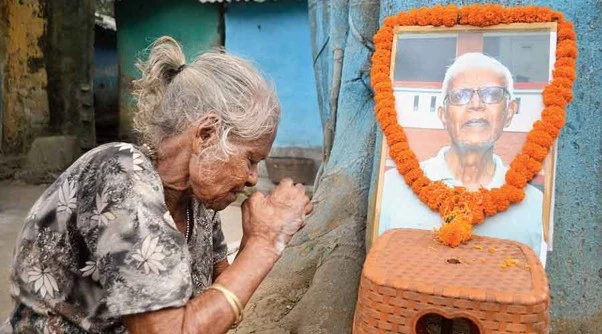
The reasons advanced for the ‘expulsion’ are instructive. Apparently Gurbir Singh was present at a discussion on prison conditions held on the terrace of the Press Club where several persons who are out on bail in the Bhima Koregaon case also attended. The Bhima Koregaon case had become internationally notorious as academics, professors, cultural activists and even a Jesuit priest were picked up from all corners of the country and linked to an alleged conspiracy to overthrow the State. Eight years later not only are there no convictions in the case, the trial itself is yet to begin. Thankfully almost all the arrested are now out on bail but Father Stan Swamy, an 84 year old priest who worked amongst the poorest, sadly passed away in custody.
Courtesy: Anand Patwardhan
The accusation that Gurbir invited them all to the club is not only untrue as he was only an attendee. It is also irrelevant. This is a classic case of “red baiting” reminiscent of the McCarthy era in the USA of the 1950s. It is guilt by association because you are in the same room with people accused of a crime; that too a crime that has hardly been defined, let alone proved. Amongst the Bhima Koregaon co-accused are many writers, lawyers, poets and singers. It is surely within the Press Club’s ambit to hear what they have to say. Many politicians of all hues have spoken at or been present at the Press Club over the years. Many of them including LK Advani had cases pending against them, as politicians often do.
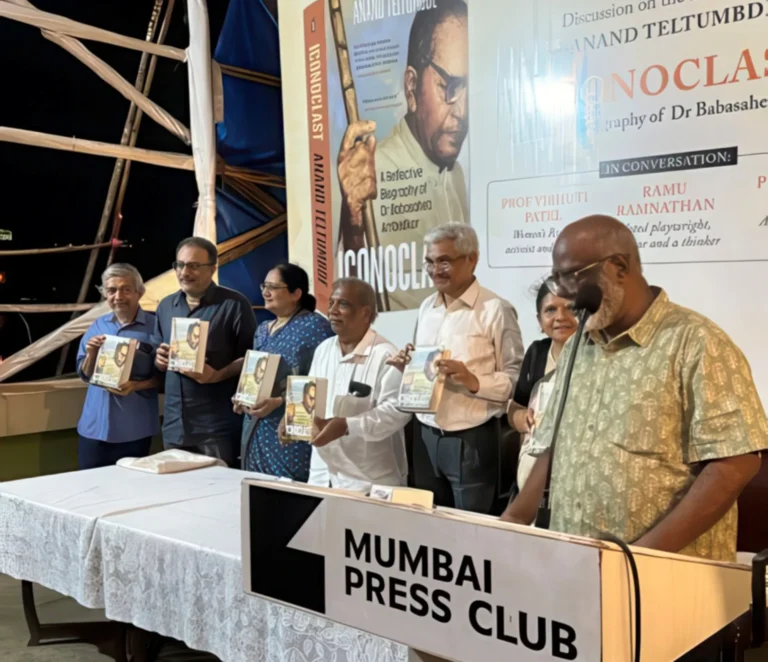
The launch of Anand Teltumbde's 'Iconoclast' at the Mumbai Press Club in October 2024. Credit: Anuradha SenGupta Both these events were allowe
Ironically only a few months earlier, the Mumbai Press Club under the same managing committee that expelled Gurbir, hosted two book launches at which Bhima Koregaon accused were present. One was the launch of “Iconoclast” a book on Dr. B.R. Ambedkar by one of the accused, the writer and scholar, Anand Teltumbde; and another, the book launch of journalist Nita Kolhatkar in which she published some interviews with the Bhima Koregaon accused. Both these events were allowed without demur. What was then so different when Gurbir Singh and others attended a discussion at which Bhima Koregaon persons were present?
The concept of bail is that a person is innocent until proven guilty. Surely bail cannot become a reason to re-create untouchability.
Last month India fell to the 157th rank out of 180 countries in the 2026 World Press Freedom Index. Our press freedom ranking is now worse than Pakistan, Nepal, Bangladesh and Sri Lanka. It is 22 ranks better than China. Is that what our government wants to correct?